

Protecting the Future through Chemistry! Developing Safe Technologies for the Treatment and Disposal of Radioactive Waste
Management of Radioactive Waste for a Sustainable Society
Nuclear energy provides an enormous amount of electricity that supports modern society. However, the management of spent nuclear fuel remains one of its greatest challenges. Although reusable fuel materials can be recovered through reprocessing, the remaining materials become radioactive waste. In addition, various types of radioactive waste are generated throughout the nuclear fuel cycle, including at nuclear power plants and fuel fabrication facilities.
Radioactive wastes contain radionuclides with extremely long half-lives, remaining radioactive for thousands to tens of thousands of years. Developing safe and reliable technologies for the treatment and disposal of these wastes is therefore a key challenge for achieving a sustainable society.
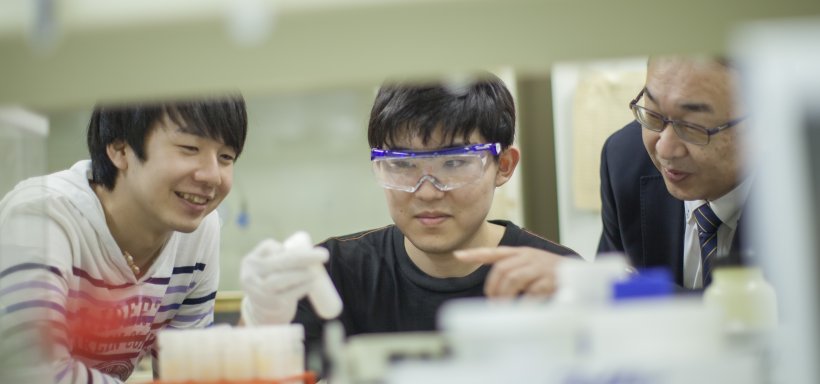
Our laboratory conducts fundamental and applicable research aimed at solving these challenges through chemistry. One of our major research areas is the development of advanced separation and decontamination technologies based on the interactions between radionuclides and various materials. We also investigate the transport of chemical substances and heat in deep geological environments, together with the chemical interactions, reaction kinetics, and equilibrium processes that govern radionuclide behavior after disposal.
By integrating these fundamental studies, we seek to establish scientifically and practically robust technologies for the safe treatment and disposal of radioactive waste, while improving the long-term performance assessment of geological disposal systems over timescales of thousands to millions of years.
 Professor
 Associate Professor
 Assistant Professor